Planting
Choose a warm, well-drained site.
Plant in full sun to partial shade. Flowering is strongest in full sun. Calusa® prefers moist, well-drained soil and adapts to sandy and loamy conditions.

Hamelia patens ‘Calusa®’
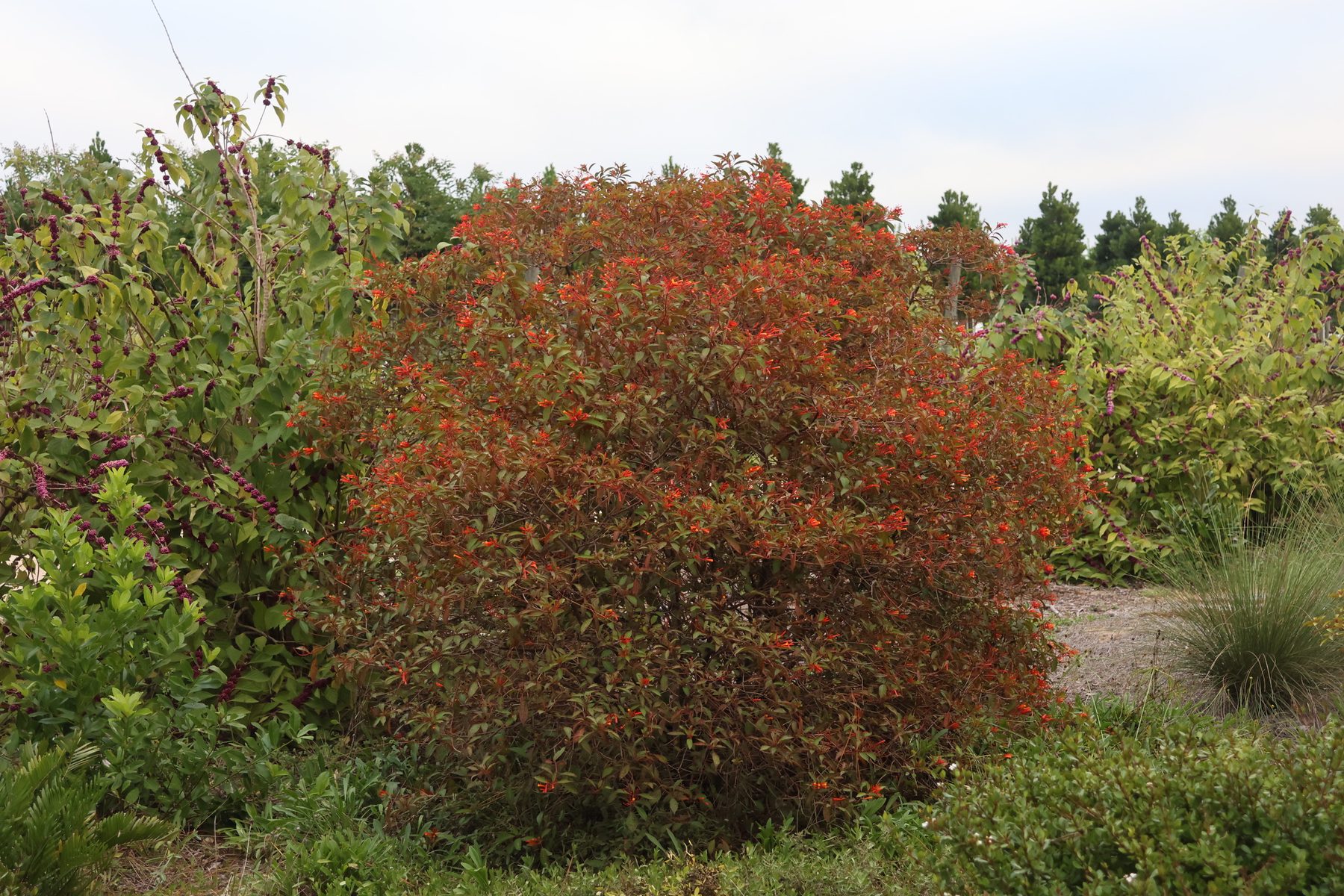
A selected Florida-native firebush with compact form, dark foliage, vivid red-orange flowers, and exceptional wildlife value.
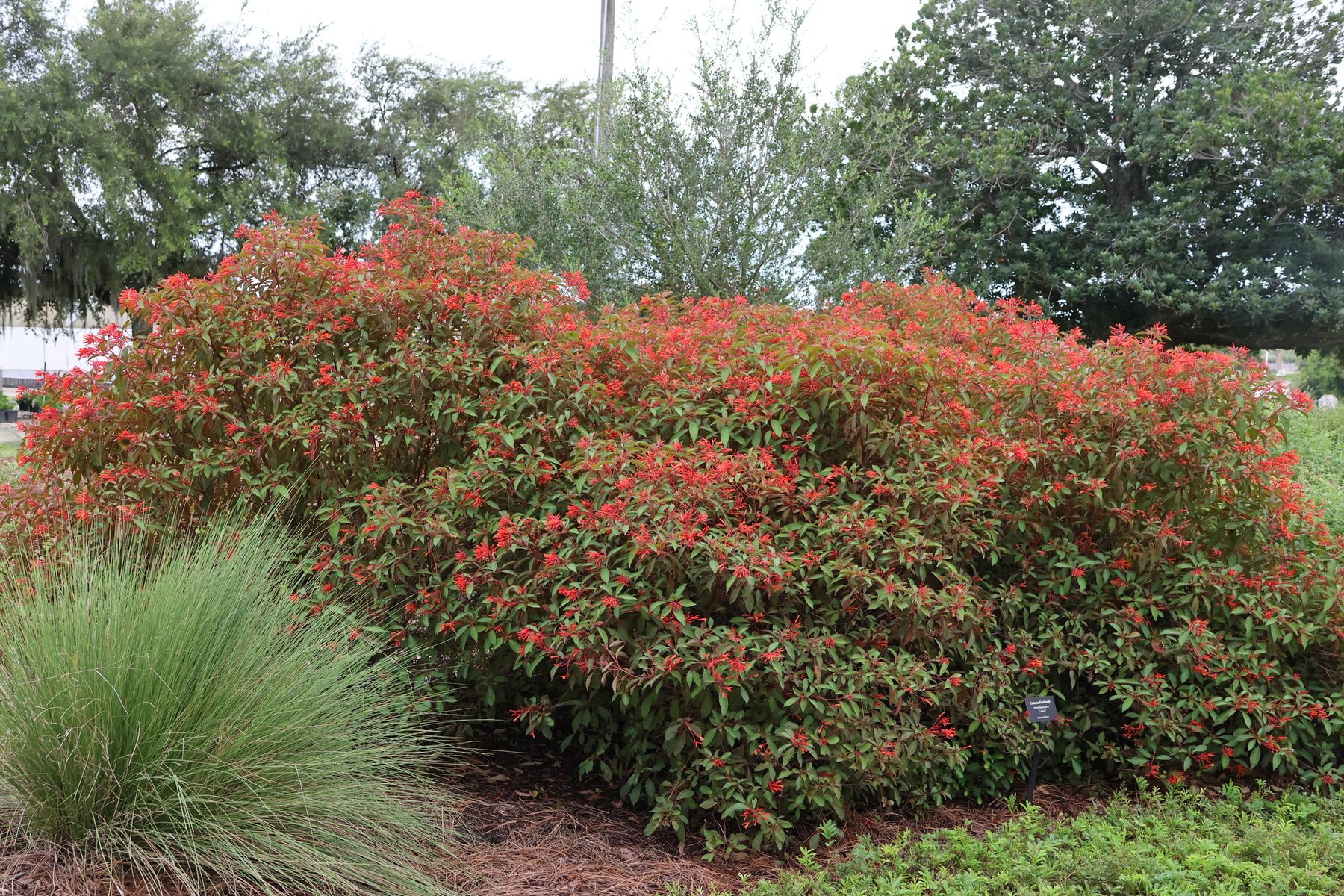
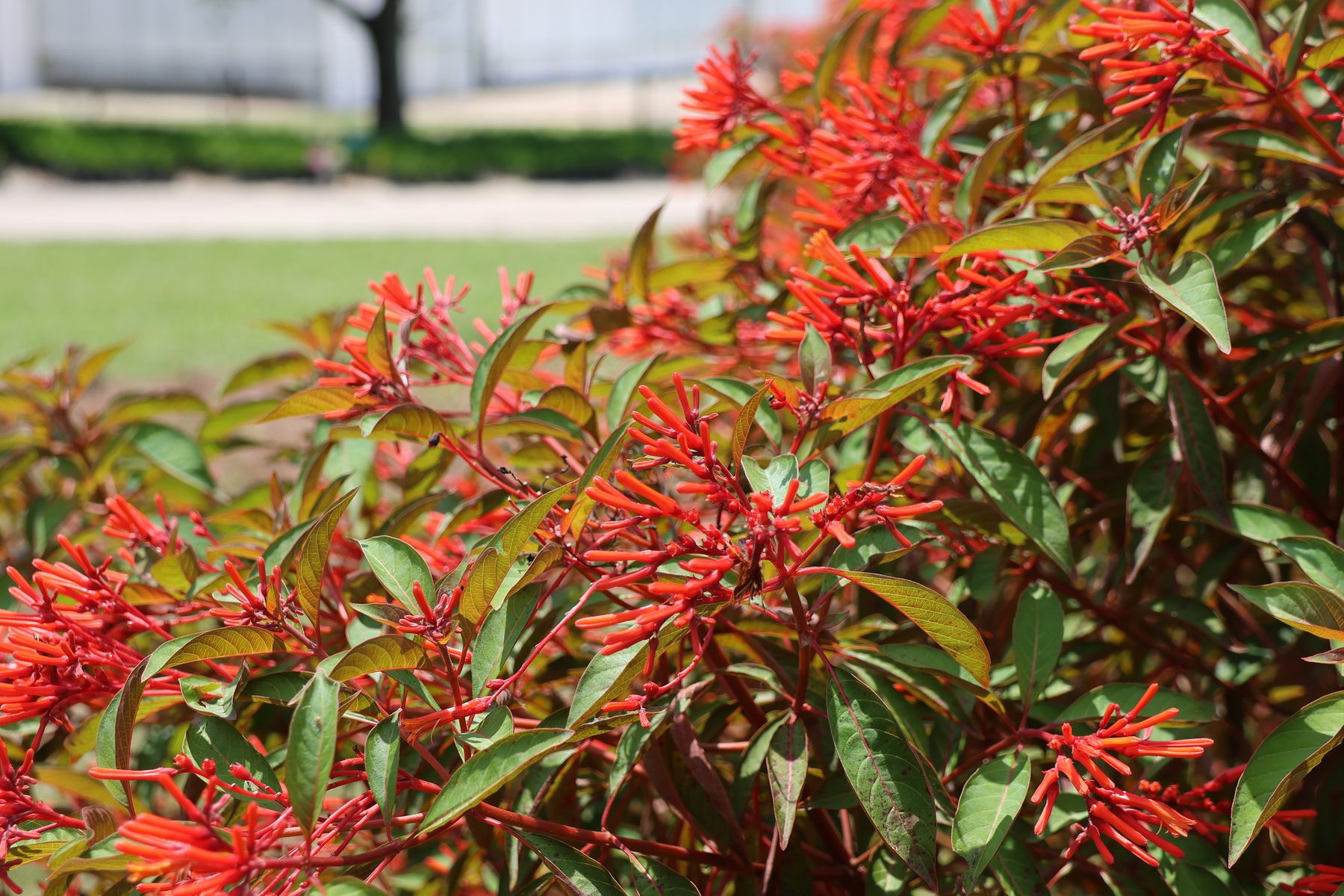
Calusa® Firebush is a Florida-native selection of Hamelia patens selected by Florida naturalist and nurseryman Brightman Logan. It grows quickly into a full, semi-evergreen shrub with red-orange tubular flowers, dark foliage, and black fruit. Its dense habit, long bloom period, and wildlife value make it useful as a hedge, screen, specimen, foundation shrub, or accent in subtropical landscapes.
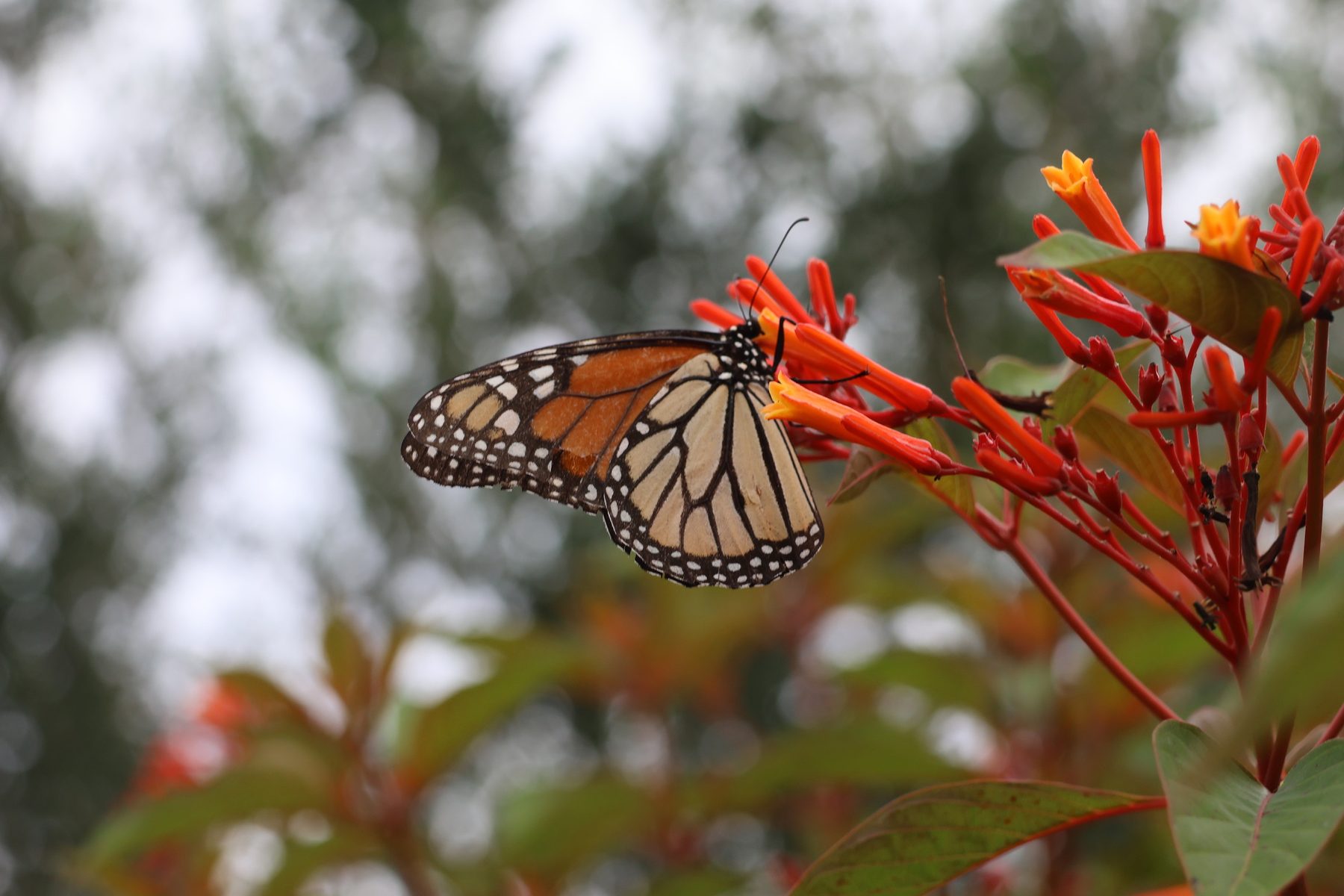
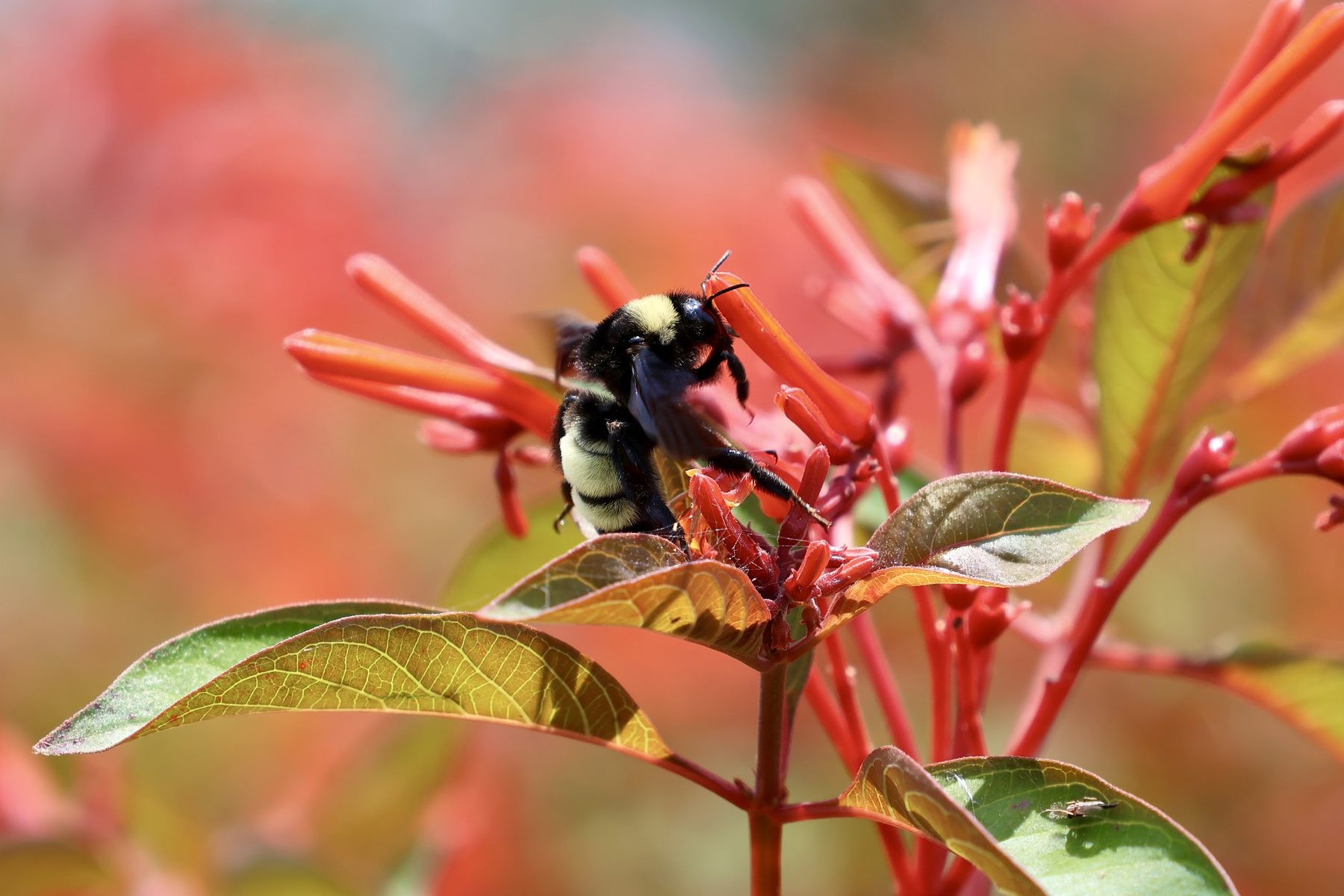
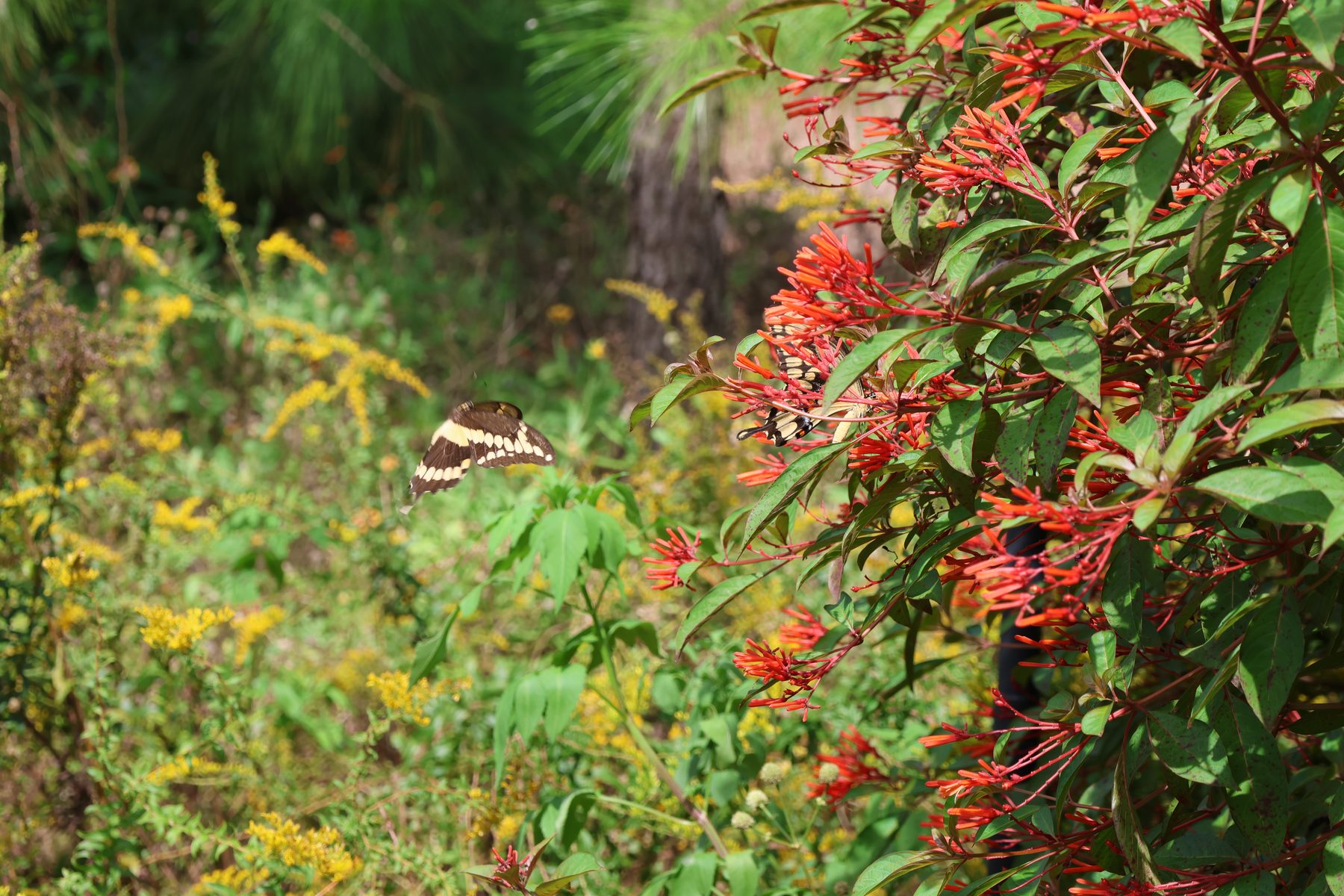
The long red-orange flowers provide nectar for hummingbirds and butterflies. Firebush also attracts long-tongued bees, including bumblebees.
Flowers are followed by dark fruit that mature to black. Songbirds and small mammals eat the fruit and help disperse seed.
Calusa® has tighter internodes and a fuller form than many firebush selections. It works well as a hedge or screen, in shrub beds and foundation plantings, as a specimen, or trained as a small accent tree.
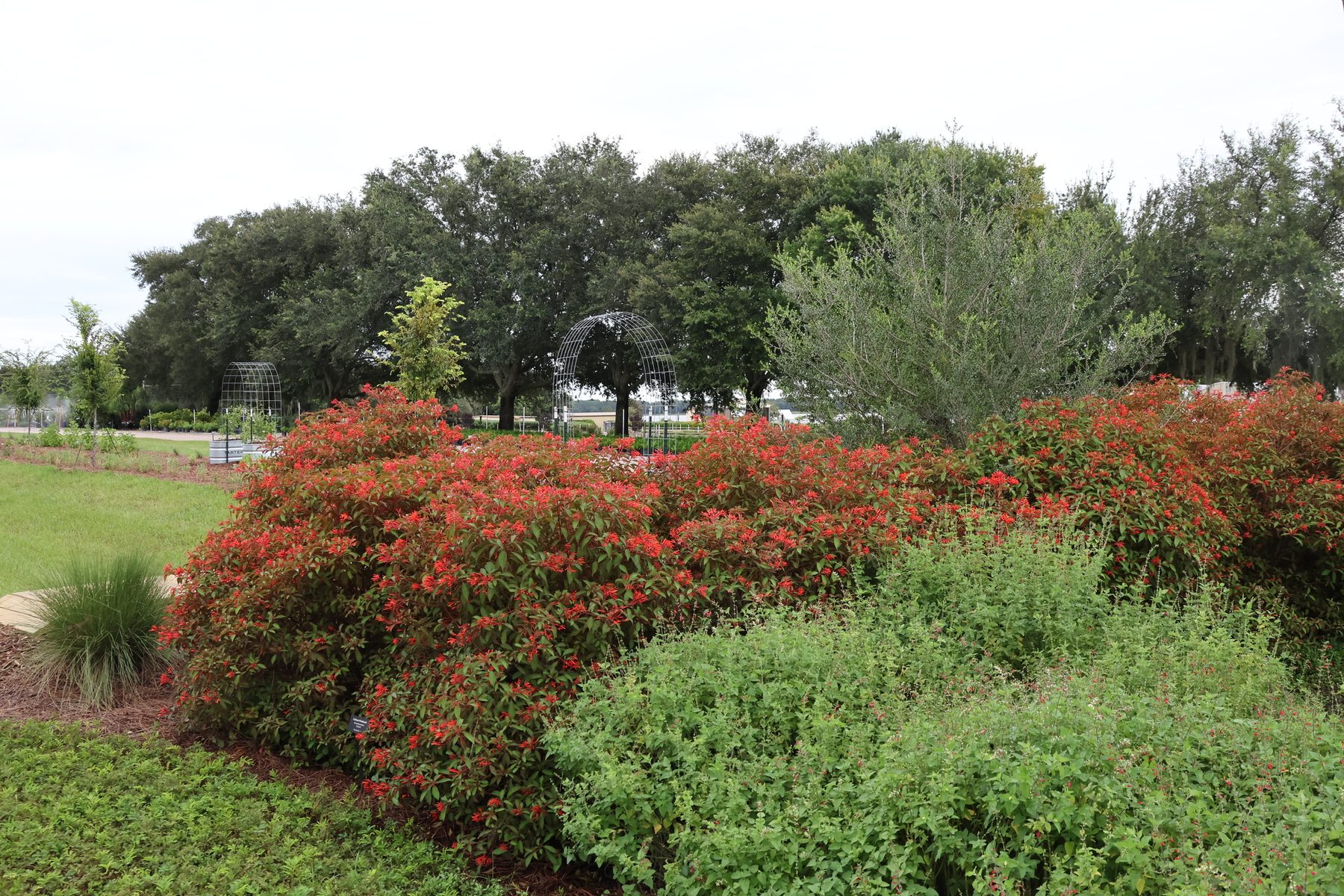
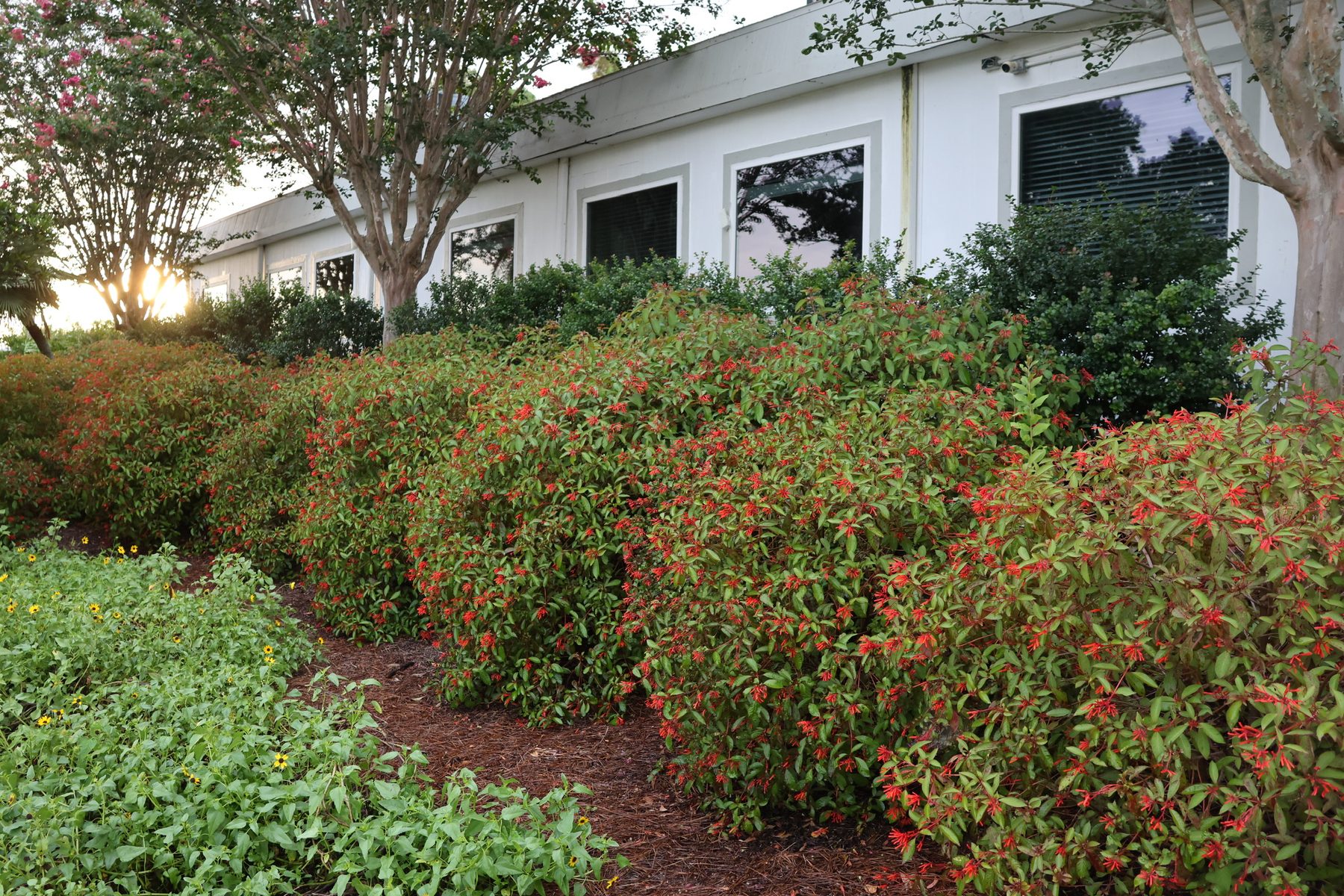
Plant in full sun to partial shade. Flowering is strongest in full sun. Calusa® prefers moist, well-drained soil and adapts to sandy and loamy conditions.
Provide regular water during establishment. Once established, firebush is heat tolerant and moderately drought tolerant.
Cut back in spring or summer when needed to shape the plant or remove cold-damaged wood. Avoid frequent hard pruning, which can reduce flowering.
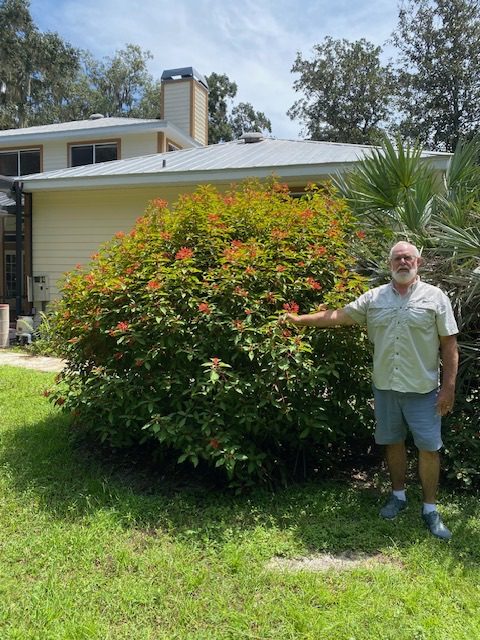
The primary source identifies Calusa® as a fast-growing Florida-native shrub, approximately 3–10 feet tall and 3–8 feet wide, suited to full sun through partial shade, with moderate drought and salt tolerance, USDA Zones 8–11, persistent red-orange flowers, black fruit, pollinator value, and spring/summer pruning as needed.
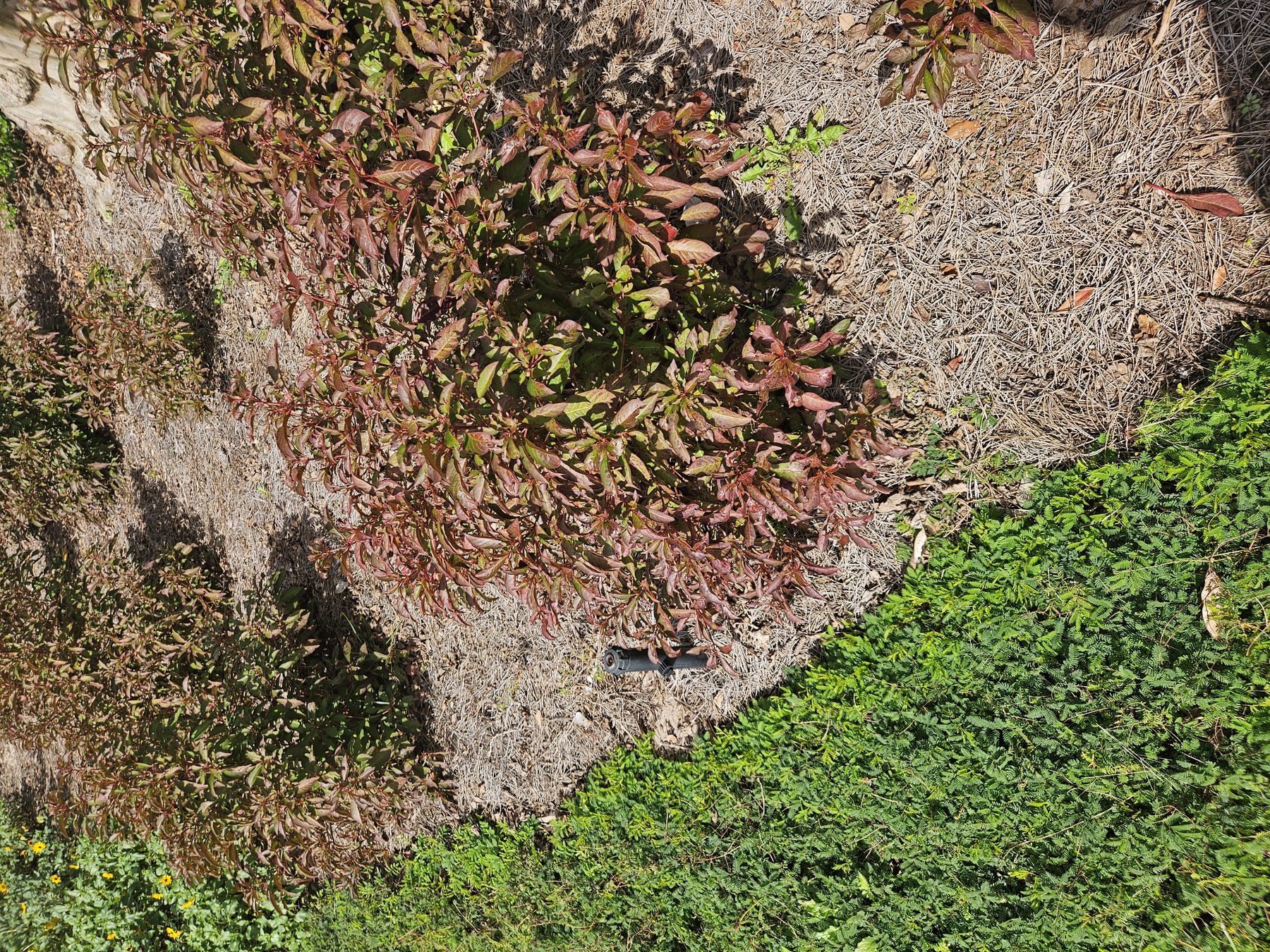
The supporting profile identifies Calusa® as an All Native Selection chosen by Florida naturalist and nurseryman Brightman Logan. It describes darker foliage, tighter internodes, a fuller and more uniform form, continuous flowering, improved fungal resistance, cold dieback followed by vigorous resprouting, and use in hedges, shrub beds, foundations, containers, and accent applications.
Species-level sources for Hamelia patens support its long bloom period, attraction to hummingbirds and butterflies, black fruit used by birds and mammals, full-sun preference for best flowering, tolerance of heat and drought once established, and cold sensitivity with regrowth from the base after freezes.
The Calusa® profile distinguishes it from non-native firebush material commonly sold in the Florida trade.
Darker foliage, tighter internodes, and a compact habit give Calusa® a denser appearance without constant shearing.
Bright red-orange flowers can persist for much of the year in warm conditions, with black fruit adding another seasonal layer.